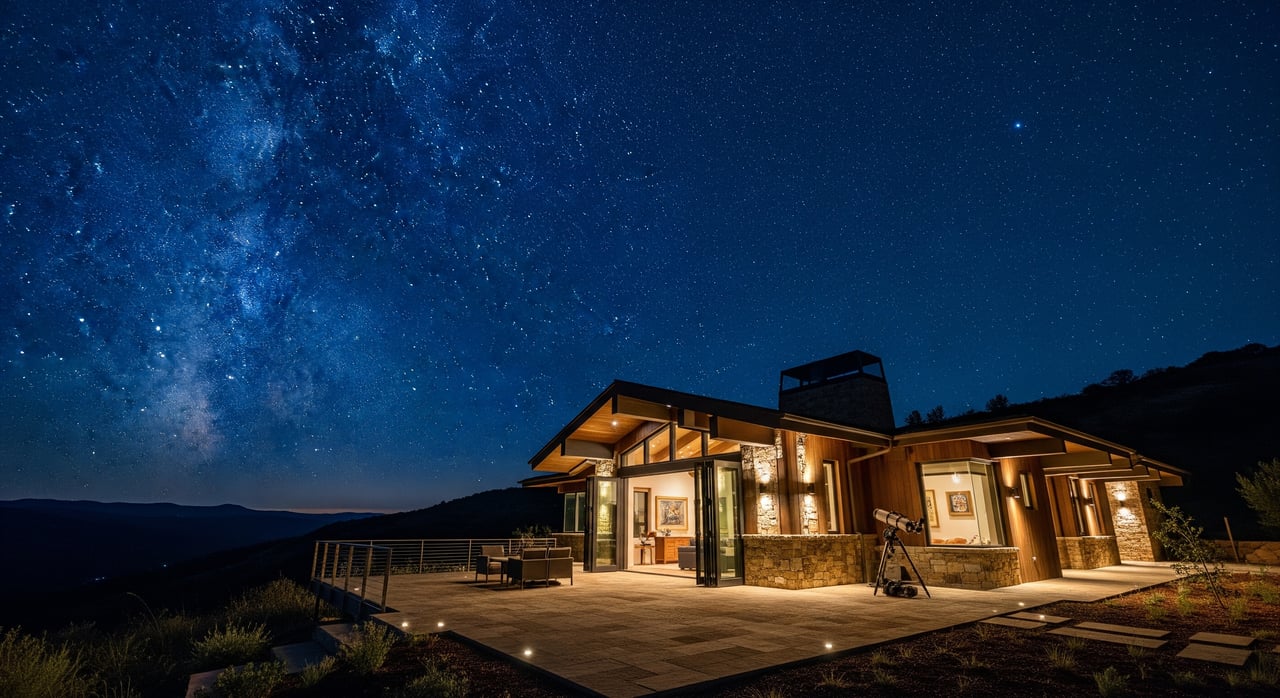
If you own a home in or around Julian, you are part of an International Dark Sky Community. That title protects the area’s starry nights and sets clear rules for outdoor lighting. The goal is simple: keep the skies dark and safe while allowing practical, well‑designed light where you need it.
This guide explains what the designation means for your day‑to‑day decisions, how to plan renovations, and how to position your home for buyers who value this lifestyle.
Why Dark Sky Designation Matters for Homeowners
Julian’s dark sky status recognizes low light pollution and a community commitment to protect it. The county’s lighting standards help reduce skyglow, glare, and light trespass while keeping walkways, driveways, and entries safe. You do not have to live in the dark. You just need the right fixtures, color temperature, and controls.
Dark sky living also supports astro‑tourism and a peaceful nighttime setting, which many buyers love. It is part of Julian’s character and a plus for your quality of life as noted by the International Dark Sky program.
Outdoor Lighting Rules for Homes
Julian follows San Diego County’s Zone C outdoor lighting standards. Here are the essentials in plain language. For property‑specific decisions, check the county code and talk with Planning & Development Services to confirm details in the county ordinance.
Shielding, Direction, and Glare Control
- Use fully shielded fixtures so light points downward and does not spill upward into the sky.
- Avoid bare bulbs and uplighting. Shielding cuts glare and improves visibility for you and your neighbors per the Zone C requirements.
Bulb Type, Brightness, and Color Temperature
- Choose warm light with a color temperature of 3,000 K or lower, or use narrow‑spectrum amber options. That limit is a core part of Zone C as defined by the county code.
- Keep brightness reasonable. The county caps total site lumens and sets thresholds where shielding is required. Most homeowners can stay compliant by using lower‑lumen bulbs, warm color temperature, and shielded fixtures.
Timers, Motion Sensors, and Curfews
- Add timers and motion sensors so lights are on only when needed. This improves safety and saves energy.
- Adaptive controls are recommended across the board and required for many public fixtures per county standards.
Common Mistakes to Avoid
- Unshielded floodlights that blast across property lines.
- Cool white or blue‑rich LEDs above 3,000 K.
- Decorative uplights that shine into trees or the sky.
- All‑night lighting without timers or sensors.
Simple fixes include swapping bulbs for warm LEDs, adding shields, lowering mounting height, and using motion control.
Renovations and New Builds Considerations
When you remodel or build, your exterior lighting should meet Zone C rules from the start. Projects that add or relocate outdoor fixtures, or that require permits, must comply at installation. Existing lighting has a phase‑in period to reach compliance over time per the county’s chapter on outdoor lighting.
Planning Exterior Lighting in Project Scope
- Include fixture cut sheets, shielding details, color temperature, and lumen output in your plans.
- Aim fixtures downward, choose 3,000 K or lower, and stay within reasonable per‑area brightness guidelines.
- Ask your electrician to verify that proposed fixtures meet Zone C requirements using the county code as reference.
Landscaping, Pathways, and Safety
- Use low, shielded path lights with warm LEDs.
- Place step and entry lights close to the ground or under eaves to reduce glare.
- Avoid uplighting trees or facades. If you need accent light, keep it low‑lumen, warm, and tightly aimed.
Security Lighting Without Overlighting
- Replace dusk‑to‑dawn floods with motion‑activated, shielded fixtures.
- Mount lights only where you need coverage, and angle them downward to prevent glare.
- Properly directed light improves visibility and cuts harsh shadows, which can support safety as community advocates have noted.
Integrating Smart and Solar Options
- Smart switches, timers, and motion sensors help you stay compliant and lower your bill.
- Many solar path and step lights now offer warm color temperatures and integrated shielding. Check specs for 3,000 K or amber output.
Value, Marketing, and Buyer Appeal
Dark sky rules are not just restrictions. They shape a calm, star‑friendly lifestyle that buyers notice.
Lifestyle Advantages Buyers Respond To
- Clear night skies and Milky Way views.
- Peaceful evenings without harsh glare.
- A community identity tied to nature and outdoor recreation. Regional sites like Borrego Springs and Anza‑Borrego Desert State Park reinforce that appeal for visitors and residents according to IDA.
While there is no Julian‑specific study proving a direct price impact, night‑sky programming and astro‑tourism can support local economies and extend visitor stays per National Park Service research on dark sky economics.
Showcasing Night-Friendly Features in Listings
- Schedule twilight photography that highlights warm, shielded lighting without blown‑out hotspots.
- Call out compliant fixtures, motion sensors, and timers in your features list.
- Mention the home’s location within an International Dark Sky Community and how outdoor spaces are designed for stargazing as recognized by IDA.
Short-Term Rental and Guest Experience
- Night‑friendly lighting helps guests find paths safely without bothering neighbors.
- Provide simple instructions for motion settings and timers so lights do not stay on all night.
- A star‑ready deck or patio can be a standout amenity for visitors.
Simple Compliance Checklist and Upgrades
Use this plan to make steady, budget‑friendly progress.
Do a Nighttime Walkthrough
- Stand at the street and in your backyard. Look for glare, hotspots, and light crossing property lines.
- Note any cool white or unshielded fixtures.
Retrofit the Biggest Offenders First
- Replace unshielded floods with shielded, motion‑activated units.
- Swap high‑Kelvin bulbs for 3,000 K or amber LEDs.
- Add shields or visors to decorative fixtures. Many options are inexpensive and easy to install.
Typical residential upgrade costs can be modest, depending on fixture count and scope, with examples reported in the low hundreds of dollars for many homes as local coverage noted.
Add Controls and Warm Bulbs
- Install timers and motion sensors on driveways, garages, and side yards.
- Keep porch lights warm and shielded. Use lower‑lumen bulbs to avoid glare.
Document Improvements for Buyers
- Save receipts, fixture cut sheets, and bulb specs.
- Take before‑and‑after photos at night. This proof helps buyers and appraisers understand your upgrades.
Next Steps and Professional Support
Verify Local Standards Before You Buy or Build
Julian is in the county’s Zone C lighting area, with a 3,000 K color limit, shielding requirements, and a phase‑in schedule for older fixtures. If you plan changes, review the county code and contact Planning & Development Services to confirm permit triggers and timelines see the ordinance and Zone C overview and outdoor lighting chapter.
Get Vendor and Fixture Recommendations
Local electricians and landscape lighting pros familiar with Zone C can recommend shielded fixtures, warm LEDs, and controls that meet the rules. For education and community events, the Julian Dark Sky Network is a helpful resource visit the network.
Partner With a Local Real Estate Team
Smart lighting upgrades can boost curb appeal, reduce energy use, and add a lifestyle story to your listing. A local agent can walk your property at dusk, flag issues, and help you prioritize quick wins that matter to buyers. When you are ready to plan, request a pricing review and a tailored prep checklist.
If you want a clear plan for upgrades, timing, and marketing, request a free valuation with Steven Sladek. We will map out the right steps, recommend trusted vendors, and position your home’s night‑sky lifestyle for maximum buyer appeal.
FAQs
What is an International Dark Sky Community?
- It is a place recognized for protecting night skies and reducing light pollution through local rules and community outreach per IDA’s program.
Do I have to replace all my lights right now?
- No. Existing lighting has a multi‑year phase‑in. New or relocated fixtures and projects requiring permits must meet current standards at installation see county code.
What color bulbs are allowed?
- Use warm light at 3,000 K or lower, or approved amber sources. Cooler, bluer light is restricted in Zone C per the ordinance.
Do I need to shield my fixtures?
- In most cases, yes. Fixtures above certain brightness thresholds must be fully shielded to direct light downward and prevent uplight and glare per Zone C rules.
How much will compliance cost?
- Many homes can comply with modest upgrades like new bulbs, shields, and a few fixtures. Reported examples show costs in the low hundreds of dollars, depending on scope local reporting.
Does dark sky status help tourism or value?
- Dark sky programming and stargazing can support local tourism and extend stays, though there is no Julian‑specific study tying it directly to home prices see NPS economic notes.
Where can I get help picking compliant fixtures?
- Ask a local electrician who knows Zone C and check community resources from the Julian Dark Sky Network for tips and events learn more.