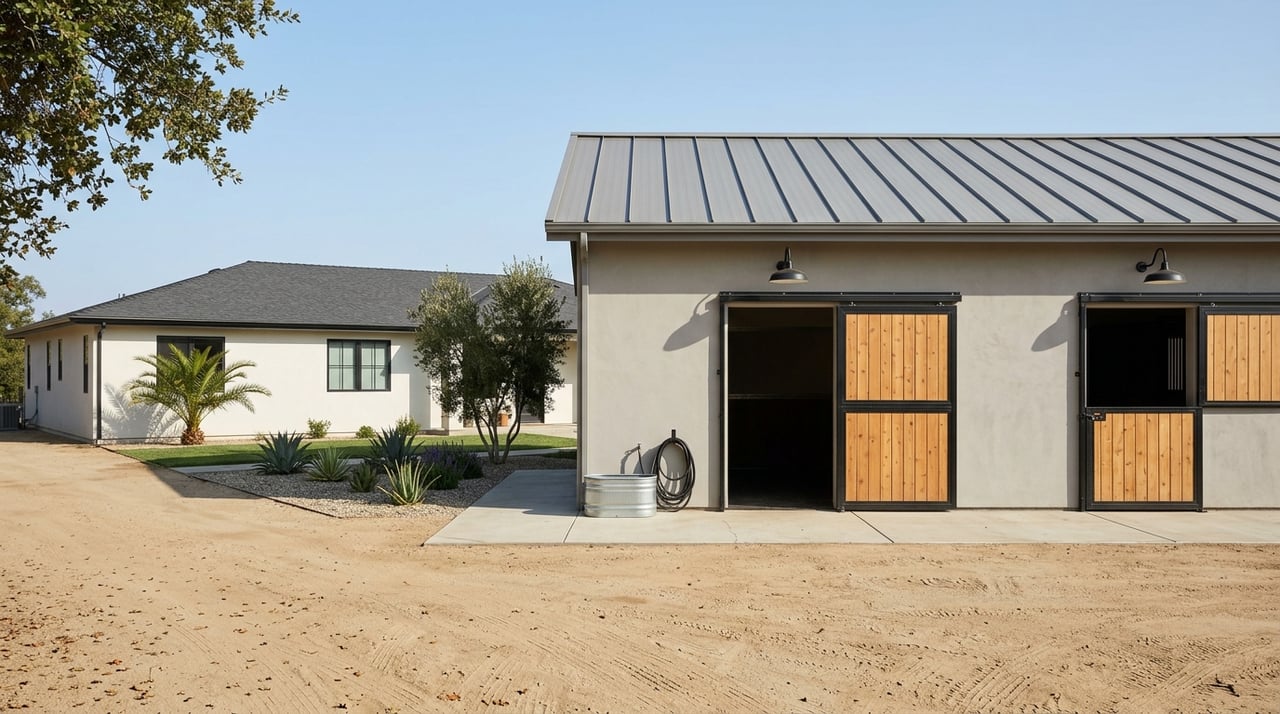
If you are dreaming about space for horses without leaving East County convenience behind, Lakeside deserves a close look. It stands out for its visible equestrian culture, public horse facilities, and trail access, but buying the right property takes more than spotting a barn in the listing photos. This guide will help you understand what makes a property truly horse-friendly in Lakeside, what to verify before you buy, and how to think about long-term ownership. Let’s dive in.
Why Lakeside Appeals to Horse Owners
Lakeside has a practical equestrian setup that is hard to ignore. San Diego County operates Dianne Jacob Lakeside Equestrian Park in the community, and the 13.88-acre facility includes covered and open arenas, livestock corrals, a warm-up track, manure composting enclosures, trailer parking, hitching posts, hose bibs, and wash racks.
That local infrastructure matters when you are comparing horse property options. It signals that Lakeside is not just rural in feel, but also supported by public equestrian amenities that fit the day-to-day needs of horse owners.
Trail access also adds to Lakeside’s appeal. The County says horses are welcome on the 2.5-mile loop at Oakoasis County Preserve, and Lakeside’s River Park Conservancy says the High Trail and Walker Preserve Trail are open to equestrians.
What Horse-Friendly Really Means
A horse-friendly property is not simply a large parcel with some open land. In unincorporated San Diego County, the more important question is whether the lot has enough usable area for the kind of horse use you want.
County zoning distinguishes private horsekeeping from a commercial horse stable. Private horsekeeping means keeping horses owned by the occupant, and that use is treated as agricultural. Larger or commercial horse uses may require added review, including a Zoning Verification Permit, Administrative Permit, or Major Use Permit depending on the scale.
Usable area is a key concept for buyers. The County excludes driveways, road easements, parking areas, residences, accessory structures, landscaping, active agriculture, and other spaces where horses would not be permanently kept.
That means gross acreage can be misleading. A property may sound generous on paper, but if much of the lot is taken up by slopes, structures, access areas, or non-horse uses, the horse-ready portion may be much smaller than you expect.
Why Usable Acreage Matters More Than Lot Size
Lakeside offers a wide range of property sizes. Recent examples in the market have ranged from about 1.42 acres to much larger ranch-style parcels, which tells you there is no single standard lot size for horse-friendly homes here.
For most buyers, the better approach is to evaluate how the property functions. You want to know how much of the site can realistically support stalls, turnout, riding space, trailer access, hay storage, and manure management.
County code also creates an important exception for some pasture areas. A pasture of at least 1 acre used only for riding or grazing, with no interior fencing and no permanent animal enclosure, is exempt from animal-enclosure setback rules.
That detail can affect how a parcel works in real life. Even so, it is smart to confirm how the site is set up before you assume open land automatically counts as usable horse space.
Common Horse Property Layouts in Lakeside
Many Lakeside horse properties follow a familiar layout. You will often see a single-family home paired with horse improvements such as stalls or a barn, a riding arena or round pen, and space for trailer or RV parking.
Some properties also include room for added flexibility. Recent examples have featured layouts with guest-house space or ADU potential, although buyers should always verify what is legal and approved for the parcel.
County rules also reflect the kinds of improvements often seen on horse properties. The ordinance contemplates barns, hay barns, covered arenas, covered riding areas, stables, trailer parking, loading areas, hay storage, and an equine living area.
The best layouts usually protect usable space instead of breaking it up. In practical terms, buyers should pay attention to how the house, driveway, parking, and outbuildings are positioned so they do not limit the horse area more than necessary.
Permits and Existing Improvements
One of the biggest mistakes buyers make is assuming an existing barn, corral, or shed is automatically legal because it is already there. In unincorporated San Diego County, some smaller structures may be exempt from a building permit, but many horse-related improvements are not.
According to the County, one-story detached accessory structures up to 120 square feet may be exempt from a building permit. Horse shade covers or carports up to 300 square feet may also be exempt, while larger sheds, barns, and similar structures generally trigger permit review.
Before you buy, it is worth checking permit history through County resources for any existing improvements. That can help you avoid surprises if you plan to modify the setup, expand facilities, or simply want confidence that the current improvements were properly reviewed.
Setbacks That Can Affect Your Plans
Setbacks are a major part of horse-property screening in Lakeside. They can limit where you place or keep structures, enclosures, and related improvements, especially on smaller parcels.
The County’s accessory-structure rules are especially important for larger outbuildings. Detached accessory buildings have lot-size-based area thresholds, and detached accessory structures that do not meet setback rules are limited to a combined 1,000 square feet.
For horse stables specifically, structures over 1,000 square feet must meet standard setbacks plus a 25-foot setback from all property lines. On lots under 5 acres, animal enclosures and associated horse-stable structures must be at least 50 feet from the nearest residence on adjacent property under separate ownership.
These details can shape whether a property will work for your goals. A parcel may look horse-ready, but setbacks can still limit expansion, relocation of stalls, or a new barn design.
Upkeep Is Part of the Buying Decision
Horse property ownership comes with daily responsibilities, and County rules give buyers a realistic picture of that workload. This is not just about finding enough land. It is also about whether you can maintain the property over time.
County standards require daily manure removal from usable horse areas. They also require covered or enclosed manure storage, manure removal from the property at least every other week or approved onsite composting, covered hay storage, written fire and evacuation planning, and vector-control measures that prevent standing water.
Those rules are useful beyond compliance. They help you think through how the site handles sanitation, storage, drainage, fire safety, and routine operations before you commit to the purchase.
Trail Access and Community Fit
For many buyers, a horse-friendly property is not just about what happens inside the fence line. It is also about how easily you can reach places to ride.
Lakeside offers several equestrian-friendly trail options nearby. The San Diego River Trail segment in Lakeside includes a 2-mile stretch from Channel Road to the eastern edge of Santee that welcomes equestrians, and the Walker Preserve segment is about 1 mile long and used by equestrians along with other trail users.
Oakoasis Preserve adds nearly 400 acres and a 2.5-mile loop trail where horses are welcome. The San Diego River Trail is also planned as a 52-mile corridor for hikers, bikers, and equestrians from Julian to Ocean Beach, which adds to the long-term appeal of the area.
How Lakeside Compares in East County
Lakeside offers a different equestrian experience than some nearby East County communities. It feels more community-adjacent than open-range, which can be a good fit if you want horse amenities while staying connected to everyday services and neighborhoods.
Ramona has a larger public trail footprint. Ramona Grasslands County Preserve spans 3,867 acres with a 4-mile loop trail system open to equestrians, and Holly Oaks County Park includes a public equestrian arena and round pen.
Alpine presents another model. Alpine Community Park spans 98 acres, but its equestrian profile is broader and less specialized than Lakeside’s dedicated mix of a local equestrian park plus horse-friendly trail segments.
If your priority is a specialized local equestrian setup with nearby public riding options, Lakeside offers a strong middle ground. If you want a larger open-space trail network, you may compare it with places like Ramona before deciding.
What to Verify Before You Buy
When you are serious about a horse-friendly property in Lakeside, a few screening questions can save you time and stress. These points matter more than a listing description alone.
- Does the parcel have enough usable acreage for your intended horse use?
- Does the zoning and animal designator allow the type and scale of use you want?
- Are existing barns, corrals, sheds, and other outbuildings legal and permitted where required?
- Can the property support manure handling, drainage, fire planning, and long-term upkeep?
- Is there workable trailer access, parking, and circulation on the site?
The most important takeaway is simple. A property can look horse-ready without actually being approved for your intended use, so verification matters.
If you are comparing horse properties in Lakeside, having local guidance can make the process much clearer. Steven Sladek can help you evaluate property layout, market opportunities, and the practical questions that matter before you make a move.
FAQs
What makes a property horse-friendly in Lakeside?
- In Lakeside, a horse-friendly property usually has enough usable area for horsekeeping, a layout that supports facilities like stalls or turnout space, and zoning that allows the intended horse use.
How is usable acreage different from total lot size in Lakeside?
- Usable acreage refers to the part of the parcel that can actually function as horse space, not areas taken up by driveways, easements, parking, the home, accessory structures, landscaping, or other excluded uses.
Do horse barns and sheds need permits in Lakeside?
- Some small detached accessory structures may be exempt, including certain one-story structures up to 120 square feet and some horse shade covers or carports up to 300 square feet, but larger barns and similar improvements generally require permit review.
Are there setback rules for horse structures in Lakeside?
- Yes. In unincorporated San Diego County, horse stables over 1,000 square feet must meet standard setbacks plus a 25-foot setback from property lines, and some enclosures or stable structures on lots under 5 acres must also be at least 50 feet from the nearest residence on adjacent property under separate ownership.
Where can you ride horses near Lakeside properties?
- Equestrian-friendly options in and near Lakeside include Dianne Jacob Lakeside Equestrian Park, the Oakoasis County Preserve loop trail, and trail segments maintained by the Lakeside River Park Conservancy such as the High Trail and Walker Preserve Trail.