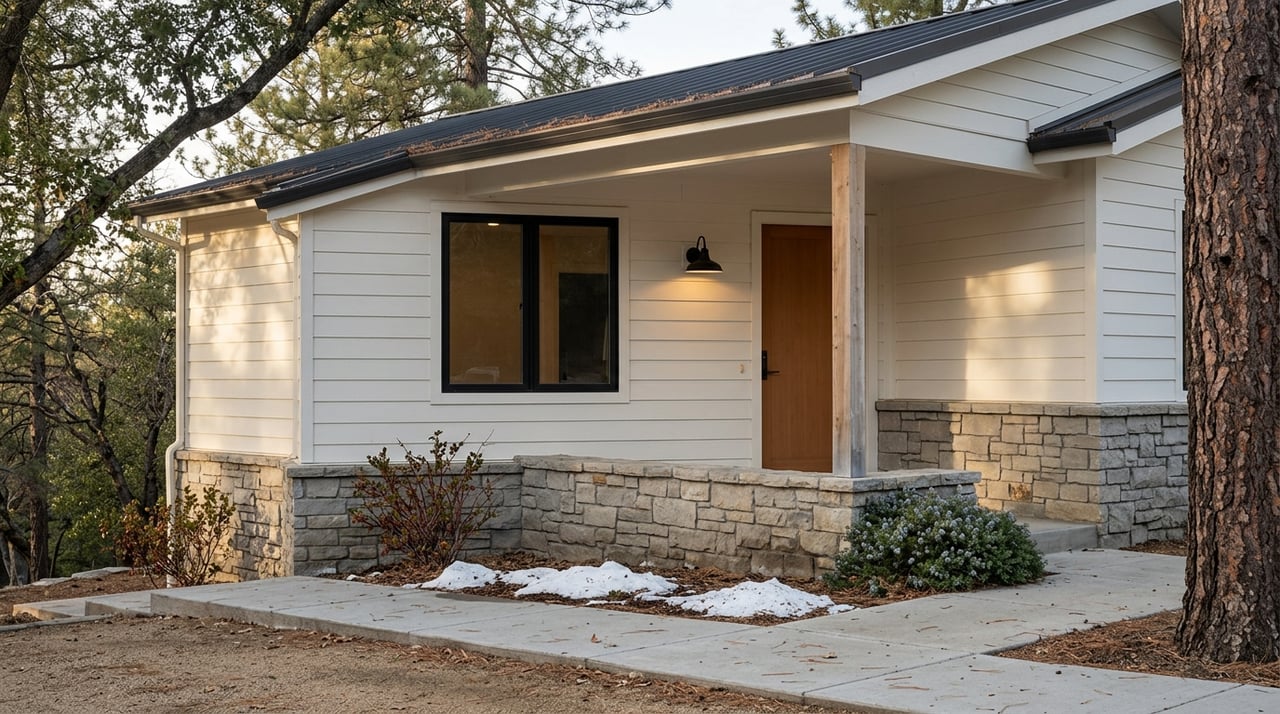
If you picture Julian as a weekend getaway, you are only seeing part of the story. For full-time residents, this mountain town offers a very different experience: four seasons, a small-town rhythm, and a lifestyle shaped as much by elevation and community as by tourism. If you are thinking about buying or selling in Julian, it helps to understand what day-to-day life really looks like here. Let’s dive in.
Julian feels like a true mountain town
Julian sits between Volcan Mountain and the Cuyamaca Mountains, and San Diego County identifies State Route 78 and 79 as the town’s main route and principal east-west connection to metro San Diego, about 60 miles away. That setting gives Julian a mountain-community identity first, rather than the feel of a typical commuter suburb.
You can also see that identity in the way the area is laid out. The county says residential land use is concentrated in identifiable subdivisions, with scattered homes between them, while commercial activity is centered mainly in Wynola and the Historic District. In everyday terms, that means Julian feels spread out, rural, and distinct from more built-up East County communities.
Another factor is the mix of full-time and part-time occupancy. According to the county community plan, about 27% of housing units in the Julian Planning Area are not permanently occupied and are used as second homes. Current Census figures for the Julian CDP list 1,768 residents, 1,194 housing units, and 870 households, which supports the idea that Julian includes both year-round residents and part-time owners.
Four seasons shape daily life
One of Julian’s biggest draws is that it offers a more defined seasonal cycle than many parts of San Diego County. NOAA data from the Julian CDF station at 4,215 feet shows an annual mean temperature of 57.8°F, with a January mean of 45.8°F and a July mean of 74.0°F.
That climate gives you mild summers and cool winters, along with measurable winter weather. NOAA reports annual precipitation of 24.48 inches and annual snowfall of 6.4 inches. If you want a place where the seasons feel real, Julian stands out.
Local community descriptions regularly highlight spring flowers, summer hiking and star-gazing, fall apple season and changing color, and winter snowfall. That pattern matters if you plan to live here full time, because the seasons affect everything from driving habits to weekend traffic to how you use your property throughout the year.
Winter brings beauty and practical planning
Winter is part of Julian’s appeal, but it also changes the pace of daily life. National Weather Service forecasts for Julian regularly include rain-and-snow possibilities during colder periods, which reflects the town’s higher elevation.
Caltrans also notes that chain controls can be required on higher-elevation roads when conditions warrant. Since Julian relies on mountain routes rather than freeway access, winter travel can be more weather-sensitive than the mileage might suggest. For year-round residents, that means preparing for slower trips and staying aware of changing conditions.
Fall is busy in a different way
For many locals, fall means apple season and a noticeable jump in visitor activity. Visit Julian says orchard season usually begins from mid-August through September, and seasonal events include Apple Season, Taste of Julian, Sip of Julian, and the Grape Stomp Festa.
The Julian Sheriff’s Substation says peak seasons and special events can draw about 3,000 to 5,000 visitors. If you love a lively town atmosphere, that can be part of the charm. If you prefer quiet weekends, it is worth understanding how much tourism shapes the local rhythm.
Community events keep the calendar full
Julian is not only active during apple season. The town’s annual calendar also includes Gold Rush Days, a Fourth of July parade, and other recurring community events throughout the year.
That steady event schedule helps support a sense of continuity for full-time residents. Julian may rely heavily on tourism for local commerce, but living here year-round still means being part of a place with recurring traditions and a clear community identity.
Services support full-time living
A common question from buyers is whether Julian functions more like a getaway market or a true residential community. The answer is both, but there are clear signs that the town supports everyday living.
Downtown Julian’s water is served by the Julian Community Services District, which supplies the 271-acre historic town center. County sanitation infrastructure also serves rural Julian through district-operated treatment plants. That does not make every property identical in utility setup, but it does show that the area is not simply off-grid cabin country.
You also have access to practical local services. Julian has a San Diego County Library branch with Wi-Fi, a community room, and public programs. There is also a local San Ysidro Health clinic offering family medicine, pediatrics, diagnostics, and dental services.
These are meaningful amenities for full-time residents. At the same time, the service base is still small-town in scale, so you should expect a different level of convenience than you would find in La Mesa or other suburban parts of San Diego County.
Public safety and road response matter here
Mountain living comes with added attention to roads and emergency response. County Public Works includes Julian in its road division and provides an after-hours urgent road hazard number for county roads, which reflects the practical importance of storm response and road maintenance in this area.
The Julian Sheriff’s Substation serves more than 200 square miles, including Julian, Cuyamaca, and Santa Ysabel. It also has a volunteer patrol that can perform vacation-home security checks. The county fire station list includes CAL FIRE Julian Station on Highway 78, another important part of the local service picture.
Housing in Julian varies by setting
Julian’s housing stock is closely tied to its land-use pattern. San Diego County’s community plan emphasizes retaining the area’s historic and rural character, with low-density development, agricultural zoning across much of the planning area, and large lot sizes where feasible.
For buyers, that often translates to a few distinct setting types. You may find smaller in-town properties and historic homes near the center of town, or more secluded homes on larger rural parcels outside the commercial core. That range is part of Julian’s appeal, especially if you are trying to match your home choice to your preferred pace of life.
The area’s lodging mix also reinforces that small-scale setting. Visit Julian lists cottages, cabins, houses, historic hotels, bed-and-breakfasts, and campgrounds, which reflects the broader character of the community, even though lodging inventory is different from the for-sale housing market.
Julian fits a specific lifestyle
Julian is usually a strong fit if you value scenery, seasonal change, and a more rural setting. It can be especially appealing if you want space, a small-town environment, and a community calendar that feels tied to the landscape and the seasons.
At the same time, Julian is not the right fit for every buyer. If your top priorities are convenience retail, fast daily commutes, or the denser amenity package you might expect in a suburban area, the tradeoffs here may feel more noticeable.
That is why local guidance matters. A move to Julian is often less about square footage alone and more about whether the setting, pace, and property type align with how you actually want to live.
What households should note about local schools
For households comparing long-term options, school size may be part of the conversation. State data for 2025-26 lists Julian Elementary with 180 students, Julian Junior High with 92, and Julian High with 132.
Julian Charter is a public charter school offering exclusively virtual K-12 instruction. These details are useful because they show the small scale of the local school system, which may be an important factor as you compare Julian with other parts of San Diego County.
What year-round living means for buyers and sellers
If you are buying in Julian, it is worth thinking beyond the home itself. You will want to consider road access, seasonal weather, utility setup, distance to everyday services, and whether you prefer being closer to town or farther out on a larger parcel.
If you are selling in Julian, understanding the year-round lifestyle story matters just as much. Buyers are often drawn to Julian for its mountain setting, four seasons, and rural character, but they also need a clear picture of what full-time living involves. Strong marketing and honest positioning can help attract the right buyer from the start.
Whether you are moving into Julian full time or preparing to sell, local context makes a real difference. If you want help understanding how a specific property fits the Julian lifestyle, connect with Steven Sladek.
FAQs
What is year-round weather like in Julian, California?
- Julian has mild summers and cool winters. NOAA reports a January mean temperature of 45.8°F, a July mean of 74.0°F, annual precipitation of 24.48 inches, and average annual snowfall of 6.4 inches.
Is Julian, CA mainly a tourist town or a full-time community?
- Julian is both a visitor destination and a full-time residential community. The county notes that tourism plays a major role in local commerce, while also documenting established residential areas and a meaningful number of permanently occupied homes.
How far is Julian from San Diego?
- San Diego County describes metropolitan San Diego as about 60 miles west of Julian, with State Route 78 and 79 serving as the main route connection.
What services are available for full-time residents in Julian?
- Julian has local services that support everyday living, including public water in the historic town center, county sanitation infrastructure, a county library branch with Wi-Fi and programs, a local health clinic, sheriff services, fire protection, and county road support.
What kinds of homes can you find in Julian?
- Julian includes a mix of residential subdivisions and scattered homes in more rural settings. Buyers may find smaller in-town properties or homes on larger lots, depending on location and setting.
Is Julian a good fit for commuters?
- Julian may work for some commuters, but it is a mountain-route town rather than a freeway town. Travel can be more weather-sensitive in winter, especially when chain controls are required on higher-elevation roads.
What should buyers consider before moving to Julian full time?
- Buyers should look closely at seasonal weather, travel routes, property setting, utility service, access to local amenities, and whether Julian’s rural pace matches their day-to-day lifestyle needs.